-
×
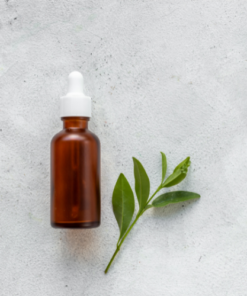 Tea Tree Essential Oil - 10ml
1 × R44,52
Tea Tree Essential Oil - 10ml
1 × R44,52
Blogs + Announcements
Basic Skills Every Beginner Needs to Start Making Skincare, Bath & Body Products

05
Oct
Oct
Basic Skills Every Beginner Needs to Start Making Skincare, Bath & Body Products
Have you ever looked at a beautiful body butter, lotion, bath soak or handmade soap and thought, “I would love to learn how to make that myself”?
Making your own skincare, bath and body products can be incredibly rewarding. Whether you want to make products for yourself and your family, enjoy a new hobby, or eventually start your own small business, learning the correct basic skills is the place to start.
At Fun with Soap, we believe beginners should be given the knowledge and confidence to understand what they are making — not simply follow a recipe without knowing why each ingredient is there.
You Don’t Have to Know Everything Before You Start
One of the biggest mistakes beginners make is thinking they need to know everything before making their first product.
You don’t.
You need to start with the fundamentals and build your knowledge as you go.
Learning to formulate products is a skill. Like cooking, you first learn what your ingredients do, how to measure them correctly and how different ingredients work together. With practice, you become more confident and eventually understand how to make your own adjustments.
1. Learn How to Weigh Ingredients Accurately
One of the most important skills in product making is accurate weighing.
Skincare and bath products should generally be formulated by weight rather than volume. A digital scale that measures accurately in grams is therefore one of the first pieces of equipment a beginner should have.
For example, saying:
“Add two tablespoons of preservative”
is not a reliable way to formulate a cosmetic product.
Instead, a properly formulated recipe will specify the exact percentage or weight required.
Accurate weighing helps with:
- Consistency from one batch to another
- Correct preservative levels
- Correct ingredient concentrations
- Reproducibility
- Product safety
2. Understand What Your Ingredients Do
You don’t need to memorise hundreds of ingredients, but you should understand the basic function of the ingredients you are using.
For example:
Emollients and oils help soften and condition the skin.
Butters such as shea butter and cocoa butter can provide richness and a protective feel.
Humectants such as glycerine help attract and retain water.
Emulsifiers allow oil and water phases to form a stable emulsion in products such as lotions and creams.
Surfactants help cleanse by allowing oils, dirt and other substances to be removed with water.
Thickeners can modify viscosity and texture.
Preservatives help protect water-containing products against the growth of microorganisms.
Understanding an ingredient’s purpose helps you make better formulation decisions rather than simply adding ingredients because a recipe contains them.
3. Learn the Difference Between Water-Based and Anhydrous Products
This is an essential concept for beginners.
An anhydrous product contains no water, such as certain body butters, oil blends and some balm products.
A water-based product contains water or a water-containing ingredient, such as a lotion, cream or many gels.
Water-containing products require particular attention to preservation because microorganisms can grow when suitable conditions are present.
This is why beginners should never assume that a product is safe simply because it looks clean or smells fine.
4. Understand Preservatives
Preservation is one of the most important subjects for anyone making skincare products.
A preservative is not simply something you add to make a product “last longer.” Its purpose is to help protect an appropriately formulated product from microbial contamination and growth.
Different preservatives have different:
- Recommended usage rates
- pH ranges
- Compatibility requirements
- Solubility characteristics
- Processing requirements
Never substitute one preservative for another without checking the manufacturer’s technical information and adjusting the formulation appropriately.
At Fun with Soap, we encourage beginners to learn why a preservative is being used and how to use it correctly.
5. Learn About pH
pH is particularly important when making products that are used on the skin or hair.
Products such as cleansers, shampoos, lotions and creams may need their pH checked and, where appropriate, adjusted.
Beginners should learn how to:
- Use pH strips or a properly calibrated pH meter
- Prepare appropriate adjustment solutions
- Measure pH correctly
- Understand the target pH of the product being made
- Avoid making unnecessary pH adjustments
Never assume that every skincare product should have the same pH.
6. Learn Good Hygiene and Sanitation
Clean working practices are essential.
Before making a product, your work area, equipment and containers should be appropriately cleaned and sanitised according to the requirements of the formulation.
Good manufacturing habits include:
- Washing hands thoroughly
- Cleaning your work surface
- Using clean equipment
- Using suitable containers
- Avoiding unnecessary contact with the product
- Keeping ingredients properly closed and stored
- Labelling ingredients and finished products
Good hygiene does not replace preservation, and preservation does not replace good hygiene. Both are important.
7. Learn How to Follow a Formula
A formula is more than a list of ingredients.
Beginners should learn to read a recipe carefully and understand:
- Ingredient quantities
- Percentages
- Phases
- Processing temperatures
- Mixing instructions
- Addition temperatures
- pH requirements
- Preservative requirements
- Packaging requirements
Don’t rush through a recipe.
Read it from beginning to end before you start.
8. Learn About Phases
Many cosmetic formulations are divided into different phases.
For example, a lotion may have:
Water phase – ingredients that are incorporated into the water portion.
Oil phase – oils, butters and oil-soluble ingredients.
Cool-down phase – ingredients that are added at a lower temperature because they may be sensitive to heat.
Understanding phases makes recipes much easier to follow and helps you understand what is happening during the manufacturing process.
9. Learn Basic Emulsification
If you want to make lotions and creams, emulsification is an important skill.
Oil and water don’t naturally stay mixed. An emulsifier helps create and stabilise an emulsion.
Beginners need to understand that simply mixing oil and water together does not automatically create a stable lotion.
The correct:
- Emulsifier
- Usage level
- Phase composition
- Processing method
- Temperature
- Mixing
- Cool-down procedure
all contribute to the final product.
10. Learn to Make Small Test Batches
Don’t start by making five litres of a product you’ve never made before.
Start small.
Small test batches allow you to learn without wasting large quantities of ingredients if something goes wrong.
Once you understand the process and have a repeatable result, you can increase the batch size.
11. Keep Records
Record keeping is a habit every serious product maker should develop.
Write down:
- Date made
- Batch size
- Ingredient quantities
- Ingredient batch numbers where applicable
- Processing temperatures
- pH
- Appearance
- Texture
- Fragrance
- Any changes made
- Observations during storage
Good records make it much easier to reproduce a successful product or investigate a problem.
12. Learn Basic Product Testing
Making a product that looks and feels beautiful is only part of the process.
You also need to consider stability, packaging compatibility and, particularly for water-containing products, microbiological safety.
Depending on the product and intended use, testing may include:
- pH testing
- Stability observation
- Packaging compatibility
- Freeze/thaw or temperature testing where appropriate
- Microbiological testing
- Preservative efficacy/challenge testing where appropriate
If you intend to sell cosmetic products, appropriate safety and compliance requirements must be taken seriously.
13. Learn the Difference Between a Hobby and Selling Products
Making something for yourself is very different from placing a product on the market.
When you make products for sale, you take responsibility for ensuring that your products are appropriately formulated, manufactured, labelled and tested in accordance with the requirements applicable to your market.
You should also understand cosmetic labelling, ingredient declarations, batch identification, product claims and appropriate safety documentation.
Don’t make medical claims about cosmetic products.
A moisturiser can moisturise. A cleanser can cleanse. A bath product can provide a pleasant bathing experience.
Cosmetics should not be presented as medicines unless they meet the requirements applicable to medicinal products.
How Fun with Soap Helps Beginners
This is where Fun with Soap comes in.
Founded in 2006, Fun with Soap was created to help people discover the wonderful world of soap making, skincare, bath and body products.
We understand that starting can feel overwhelming.
There are hundreds of ingredients available, unfamiliar terminology, different preservatives, emulsifiers, surfactants, oils, butters and fragrances — and suddenly that simple-looking recipe doesn’t seem so simple!
Our aim is to make the learning process easier.
We Help You Understand What You’re Making
At Fun with Soap, we don’t believe beginners should simply be handed a recipe and told:
“Good luck!”
We want you to understand the ingredients and the processes behind the recipes.
Our recipes, tutorials and educational resources are designed to help you develop your knowledge step by step.
Recipes and Tutorials for Beginners
Our website provides a growing collection of recipes and tutorials covering different areas of soap, skincare, bath and body product making.
You can learn about different ingredients, formulation techniques and manufacturing processes while building your confidence.
Visit:
to browse our house recipes and tutorials.
We Supply Ingredients and Equipment
Finding the right ingredients can be one of the biggest challenges for a beginner.
Fun with Soap supplies a wide range of ingredients and materials used in soap making, skincare, bath and body formulation.
This means you can learn about an ingredient through our educational resources and then source the ingredients you need to put your knowledge into practice.
Start Small and Build Your Skills
You don’t need a laboratory full of equipment to begin learning.
Start with simple products.
Learn how to make a bath soak.
Then perhaps a body butter.
Move on to a simple cleanser.
Learn about emulsions.
Try a lotion.
Explore soap making.
Every product you make teaches you something new.
Your Learning Journey Starts With One Recipe
The wonderful thing about making your own products is that you never stop learning.
You start by following a recipe.
Then you begin to understand the ingredients.
Then you learn how to calculate percentages.
Eventually, you understand why a formulation works — and that’s when the real fun begins.
At Fun with Soap, our goal is to equip beginners with knowledge, ingredients, recipes and practical guidance so they can become more confident product makers.
Whether you’re making products as a hobby, creating gifts for family and friends, or dreaming about starting your own small business, we’re here to help you learn along the way.
Start your journey with Fun with Soap.
Browse our recipes, tutorials and products at:
Fun with Soap — helping you learn, create and grow since 2006.